In times of armed conflict, geopolitical rivalry, and migration, inequality and food security are pressing issues. Daring to face these challenges requires political will and courage. Sustainable food security, societal stability, and peace can only be achieved through interconnectedness. This is essential for a stable world in which the European Union can continue to develop peacefully.
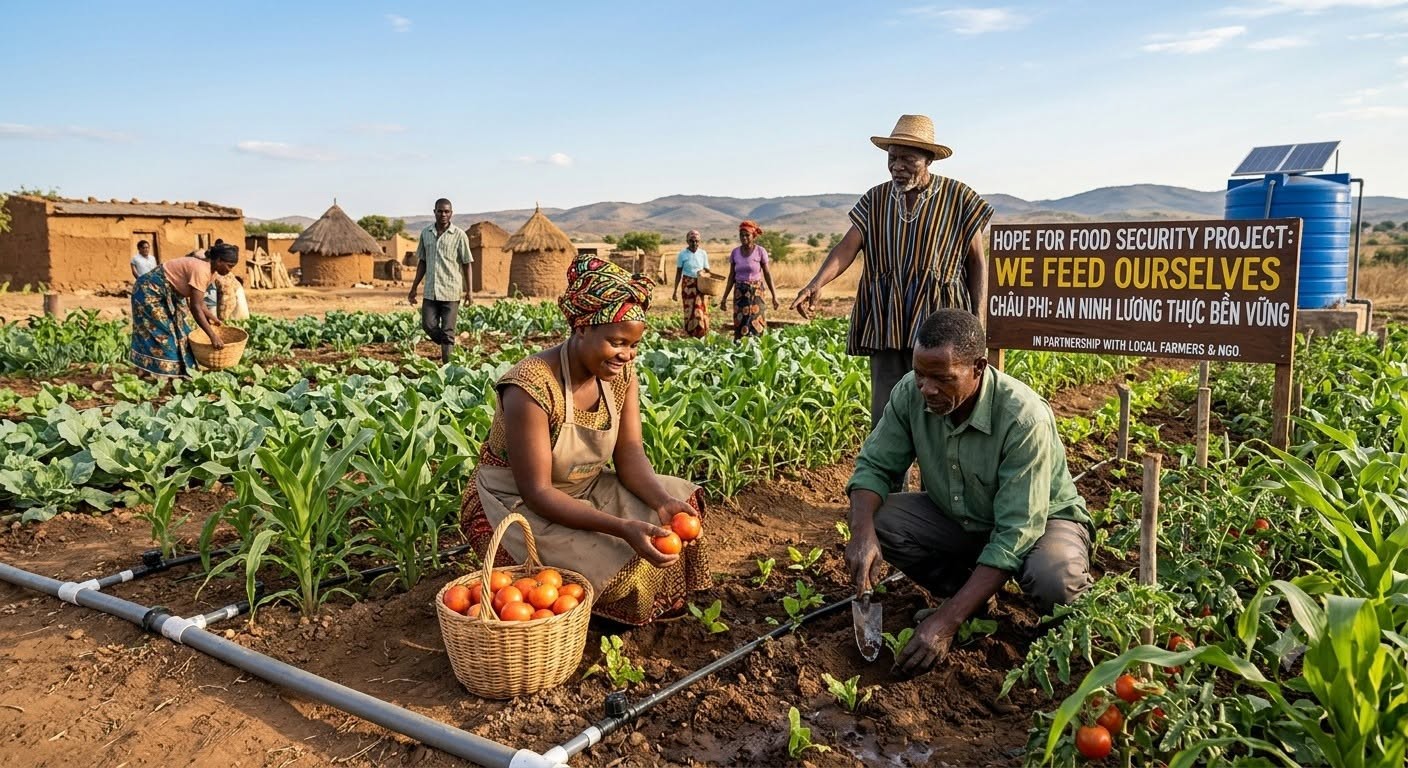
The recent UN SOFI report (2026) shows that 309 million people on the African continent are facing severe food shortages. The population of our southern neighboring continent is expected to nearly double to 2.5 billion people — most of whom will be youths under the age of 25 — by 2050. That is a quarter of the world's population.
Opportunities in one's own country
However, the situation in Africa is far from hopeless. By intensifying the agricultural sector, Africa can both solve the food crisis and boost the global economy. As local fertilizer use is generally low, productivity can be enhanced through a targeted use of synthetic and biological inputs including legume integration. In this way, the continent is capable of creating millions of new jobs and opportunities arise for large groups of people in their own countries while also creating myriad benefits abroad.
Africa is in urgent need of water, energy, and food. A lack of sufficient energy is a bottleneck for many agricultural systems: for irrigation and post-harvest processing, but also more broadly for the production of necessary fertilizers and other agricultural inputs. The current conflicts in the Middle East demonstrate how vulnerable energy and fertilizer availability is, causing disruptions at a global scale. The African Union calls for investments, technology, and financial support. These can drastically increase the efficiency and productivity of African agriculture and thereby promote food and livelihood security, with large knock-on benefits for Europe.
But to achieve this, do we go back to the development aid approach of yesterday?
That era is over. African countries are asking for targeted investment and for partnerships with emerging economies that strengthened their agricultural systems earlier. Their knowledge and expertise can be of great benefit to African countries, and the European Union can play a key role as a 'matchmaker' to create development and economic impact. This is how new alliances are formed that contribute to the kind of global stability that benefits Africa and Europe alike.
Concrete results
Moreover, there is no shortage of strategies, pilot projects, or local grassroots initiatives supporting social and economic development through agriculture in Africa. However, converting these into concrete results at scale is not always easy. After all, regulatory obstacles, trade barriers, and practical obstacles often separate ambition from delivery. Targeted investments in the agricultural sector can be decisive for structural growth.
Asia is living proof that agricultural development can drive economic growth and change. For Indonesia, Malaysia, the Philippines, Thailand, and Vietnam, agriculture was the engine for rural development, employment, and industrialization at the end of the last century. Biodiversity-driven tactics such as improved varieties and biological control often played a critical role in raising primary productivity while strengthening farmers’ income base and favoring integrated rural development. In many countries, agriculture still forms the basis of the national economy as one of the largest employers, while steadily releasing labor into other sectors as economies diversify.
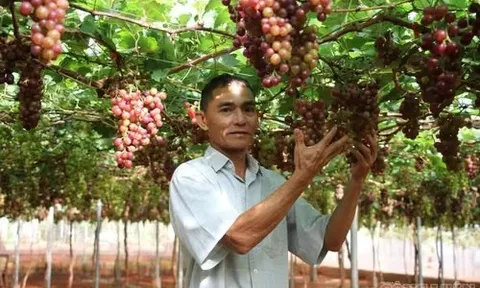
Thus, in Vietnam, after forty years of 'Doi Moi' (renewal), the agricultural sector has grown into a solid pillar of the national economy by 2025. Currently, Vietnam is among the market leaders in agricultural and food exports — a stark change for a country that still struggled with serious food shortages in the 1980s. National stability and political will were crucial conditions for this. Today, Vietnam's total agricultural exports amounted to over 70 billion dollars in 2025, nearly as much as those of the entire African continent.
Economic growth
China, Bangladesh, Vietnam, and Indonesia, as well as Brazil, have all strategically utilized the agricultural sector to promote economic growth. Latin American nations have kept this momentum going, with nearly two out of three Brazilian farmers now using microbials for pest control. This fact alone and what it points to as evidence for economic and structural development provides sufficient reason to make cooperation between Africa, Asia, and Europe a spearhead of EU foreign policy. But do not think that Africa has nothing to offer; thanks in part to advice from experts from Kenya, Vietnam grew in the 1980s to become the world's second-largest coffee exporter.
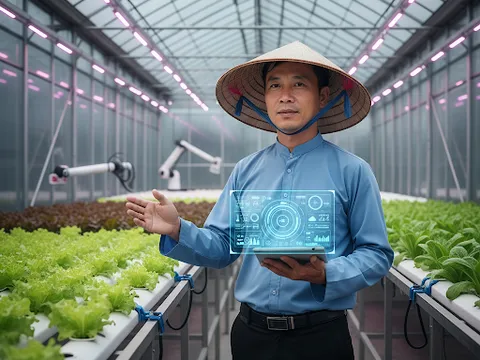
By combining ecological principles with the knowledge of farmers, AI, genetics, and digital tools, and the necessary compatible inputs, agricultural yields in Africa can be sustainably increased despite the current climate crisis. This can be achieved while biodiversity and soil health are steadily restored and profitability remains safeguarded.
The necessary innovations are already available and being further developed by African institutes. They are doing this in collaboration with companies, universities, global agricultural research networks such as the CGIAR, and the Food and Agriculture Organization (FAO). Dutch, Belgian, and European researchers are playing a significant role.
All innovations can have a great impact when introduced as a system transformation. Over the last decades, CGIAR centers like the maize and wheat improvement center CIMMYT conducted several scaling programs with national partners. In doing so, systems innovations and improved seeds were promoted with small local seed companies, while also covering crop and soil management (including biological control – the CGIAR's most impactful intervention in Sub-Saharan Africa), small scale mechanization, and market insight. Several of these initiatives reach millions of smallholder farmers (like CSISA, MasAgro or TAAT). Since recently the CGIAR has a major scaling initiative in key regions in the global South. Meanwhile, FAO earned global acclaim with its Farmer Field School programme during the 1980s-90s that effectively reduced pesticide use by a quarter (up to 80-90% in selected geographies) on millions of Southeast Asian farms, while raising crop yields and profit by 13-19%.
Political will
Africa can gradually structure the export of rare minerals, agricultural raw materials, and forestry products in such a way that value is added through domestic processing. As a result, and under conditions of conscious and fair trade, the proceeds can flow directly back into the regional economy instead of being spent on food imports. However, this requires political will and discipline.
The advisory report Food Security in a Shaky World (May 2026) by the Advisory Council on International Affairs provides a good starting point. Together with the EU, the Netherlands can focus on a triangular formula, strategically utilizing experiences from Asia and Latin America to put the African 21st-century food system on track. This could potentially involve the seed and biological control sector, as the Netherlands and Belgium are very strong in these areas.
Naturally, the United Nations, the World Bank, the African Development Bank, and African institutions themselves must also come on board. In this way, smart financing and innovation can be used to build a promising future perspective for a continent in need.
About the authors
-Ad Spijkers worked for the FAO in Africa and Asia for over thirty years. Subsequently, he served as advisor to the Director-General for Africa and the Middle East and worked in Vietnam;
-Martin Kropff is Professor Emeritus of Crop Ecology and was Rector Magnificus of Wageningen University. He held various leadership positions at the CGIAR, including as Director-General at CIMMYT;
-Kris Wyckhuys works as independent consultant and is honorary professor at The University of Queensland and The Chinese Academy of Agricultural Sciences (CAAS). He was previously employed with the CGIAR in Latin America and Southeast Asia.
October 16, 2026